How to Clean Grout Without Damaging Your Tile
You can have beautiful tiles in your bathroom or kitchen, but if the grout between them starts looking dirty, the entire space can feel less clean.
Grout tends to collect dirt, soap residue, and moisture over time. Since it’s often slightly lower than the tile surface, regular mopping doesn’t always remove everything that builds up.
If you’ve tried scrubbing your grout before, you probably know how frustrating it can be. The trick is finding a cleaning method that removes dirt without damaging the grout or the surrounding tiles.
Here’s how to do it safely.
Why Does Grout Get Dirty So Easily?
Most traditional cement grout is porous, meaning it can absorb moisture and collect dirt more easily than the tile around it.
In bathrooms, soap residue and moisture can cause grout lines to become discoloured. In kitchens, grease, food spills, and everyday foot traffic can create similar problems.
Even if you clean your floors regularly, grout can gradually darken because dirt settles into its surface.
The type of grout, its age, and whether it’s properly sealed can all affect how easily it becomes stained.
Start With a Gentle Cleaning Solution
Before reaching for strong cleaning chemicals, start with something mild.
For many ceramic and porcelain tile installations, warm water and a small amount of pH-neutral tile cleaner can help remove everyday dirt.
Apply the cleaner according to the product instructions and allow it to work on the surface before scrubbing.
Avoid using too much water, especially if you have damaged grout or areas where moisture could get underneath the tiles.
If you’re unsure which cleaner to use, check the tile and grout manufacturer’s recommendations first.
Use a Soft Brush Instead of Harsh Scrubbing Tools
A stiff wire brush might seem like a good way to remove stubborn stains, but it can scratch tile surfaces and wear away grout.
Instead, use a soft nylon brush or a grout cleaning brush designed for the job.
Work gently along the grout lines rather than applying excessive pressure.
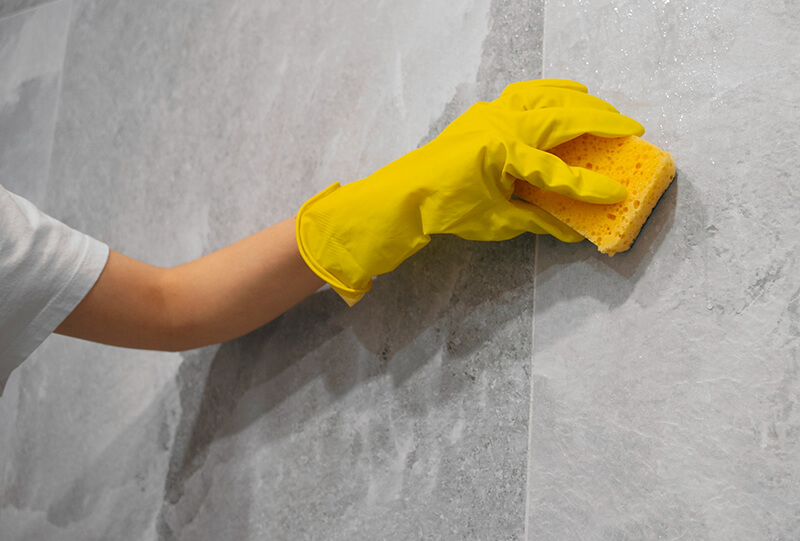
For larger tiled areas, clean one small section at a time. This gives you better control and prevents the cleaning solution from drying before you can remove it.
Once finished, wipe away the remaining cleaner with a damp cloth or mop.
Be Careful With Vinegar and Bleach
There are plenty of online cleaning tips that recommend vinegar, bleach, or other strong household products.
However, these aren’t always safe for your flooring.
Vinegar is acidic and can gradually damage cement-based grout. It can also harm natural stone tiles such as marble and limestone.
Bleach may cause discolouration or affect certain grout products when used incorrectly.
Mixing different cleaning chemicals can also be dangerous.
For the safest results, choose products specifically approved for your tile and grout rather than experimenting with household mixtures.
Don’t Forget to Rinse and Dry the Area
After cleaning, it’s important to remove any leftover cleaning solution.
Residue can attract more dirt, leaving your grout looking dirty again sooner than expected.
Use clean water and a lightly damp cloth or mop to remove the remaining product, following the cleaner’s directions.
Allow the area to dry thoroughly before returning furniture or rugs.
In bathrooms, improving ventilation can also help reduce ongoing moisture problems.
Should You Seal Your Grout?
Some grout products benefit from sealing because it helps reduce the amount of moisture and dirt they absorb.
However, not every type of grout requires a sealer.
Certain epoxy and other specialty grout products are designed to resist staining without additional sealing.
If your grout is older, it may be worth checking whether resealing is recommended.
A flooring specialist can help you understand which maintenance products are appropriate for your particular installation.
When Is It Time to Replace Grout or Tile?
Sometimes cleaning isn’t enough.
If your grout is cracking, crumbling, or separating from the tiles, it may need repairs rather than another round of scrubbing.
Persistent stains or mould can also indicate an underlying moisture problem that should be investigated.
Damaged tiles, loose flooring, or recurring moisture issues may require professional attention.
Addressing these problems early can help prevent more expensive repairs later.
Discover Tile Flooring Options at Exclusive Floors
Thinking about refreshing your bathroom, kitchen, or another tiled space? Exclusive Floors offers a wide selection of tile flooring options at our four locations in Abbotsford, Surrey, Coquitlam, and our newest flooring store in Vancouver.
Visit us to explore different tile styles, colours, and finishes for your next project. If you need help choosing the right flooring, submit a request through our website. One of our flooring specialists will get back to you as soon as possible to discuss your ideas and help you find an option that works for your space.